Differential probes

Home > Products > Measuring Instrument > Differential probes > Details
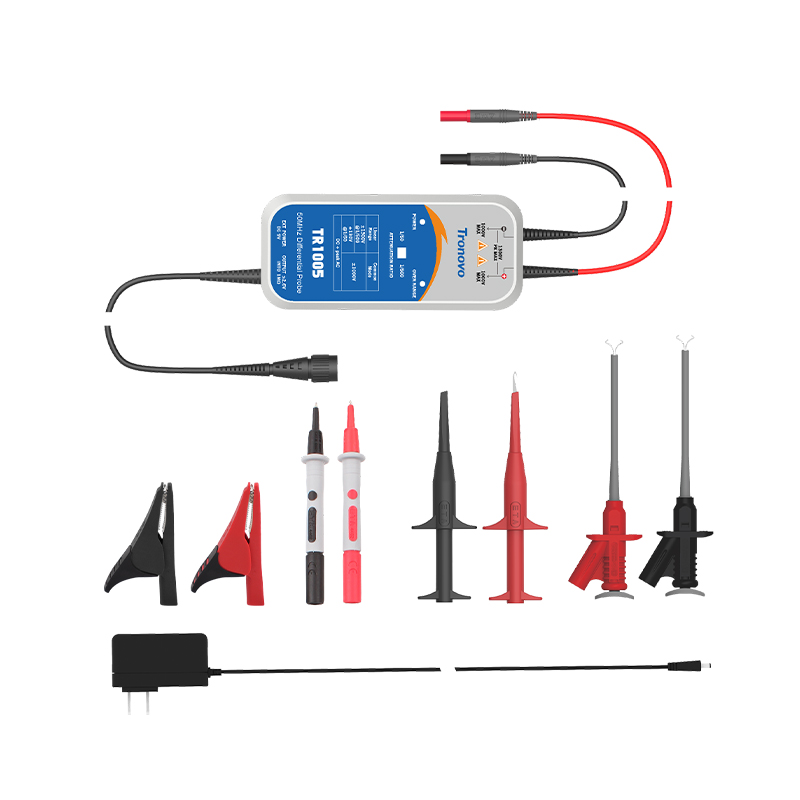
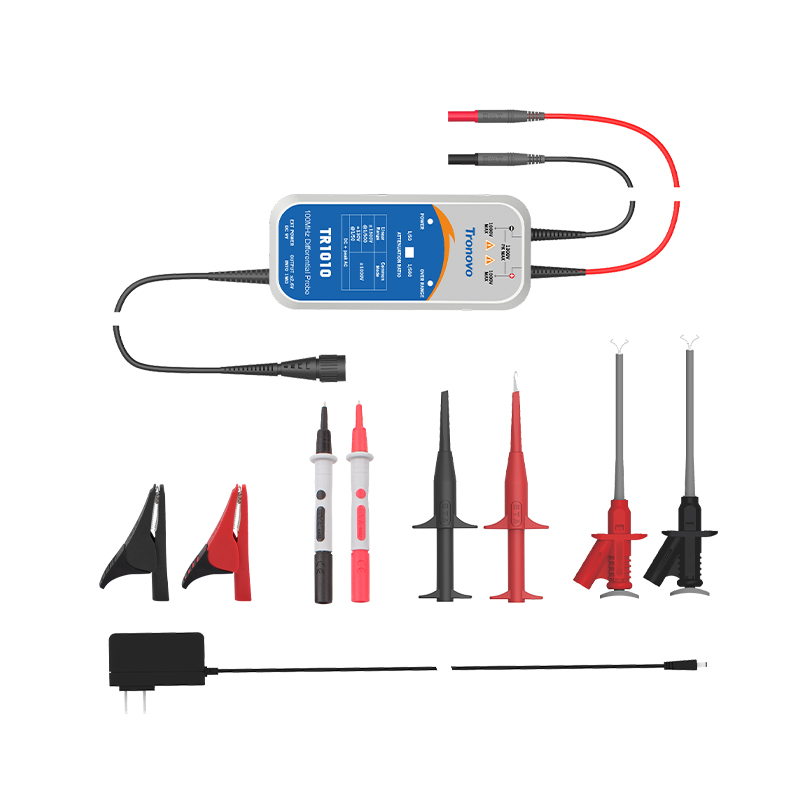
100MHz/7000V High Voltage Differential Probe

100MHz/7000V High Voltage Differential Probe

0
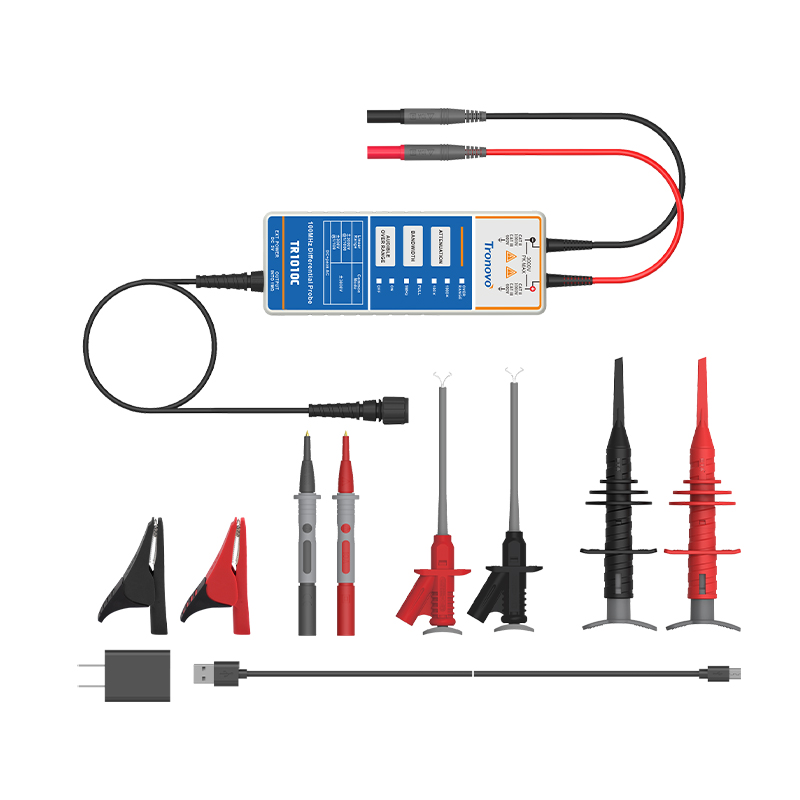
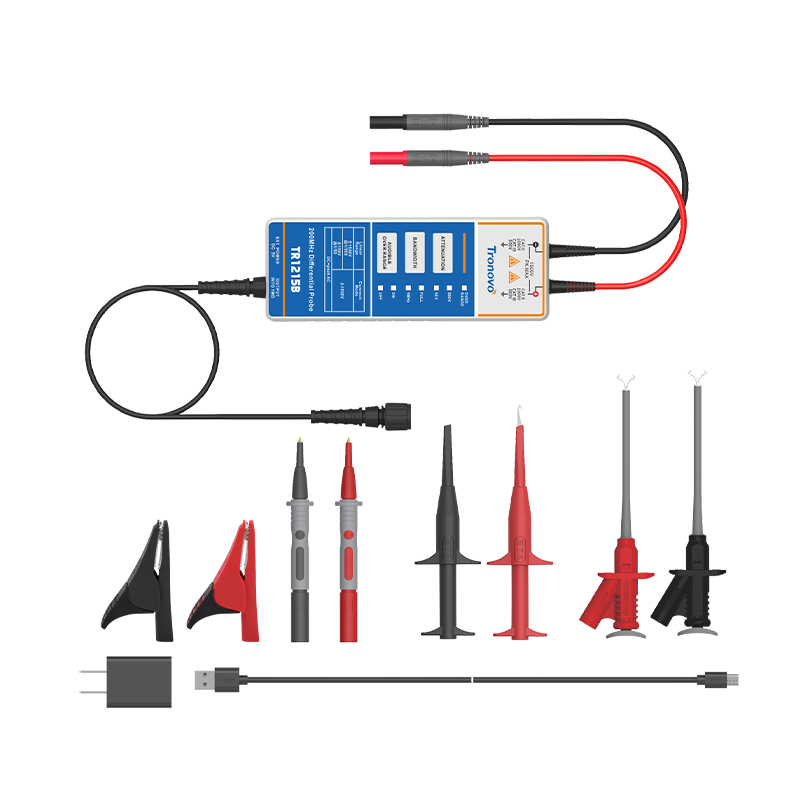
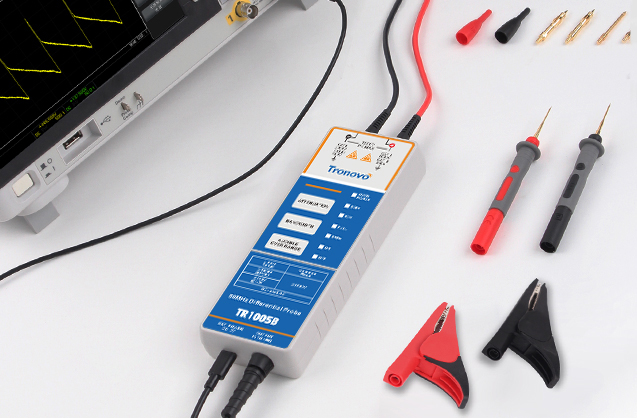
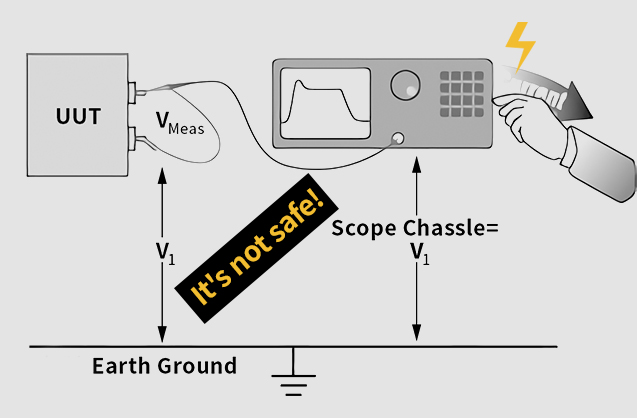
TR1010D high-voltage differential probes are suitable for all major oscilloscopes in the market, converting floating signals to low-voltage signals at the ground level, making it safe and easy to display any reference ground level oscilloscope. The probe can be used at frequencies up to 100MHz for 7000V voltages and has high common-mode rejection, making it an excellent choice for non-georeferenced, floating, or isolated measurements.Angstrom oscilloscope differential probes are ideal for power testing, switching power supplies, inverters, motor drive control, switching power supply development, maintenance and evaluation.
Performance
❯ Motor drive and inverter testing
❯ Power converter and inverter analysis
❯ Switching power supply design and debugging
❯ High-voltage floating signal measurement and troubleshooting
Key Features
❯ Standard BNC output connector
❯ Industry-leading high-stability CMRR technology
❯ Zero adjustment function with electronic touch-key design
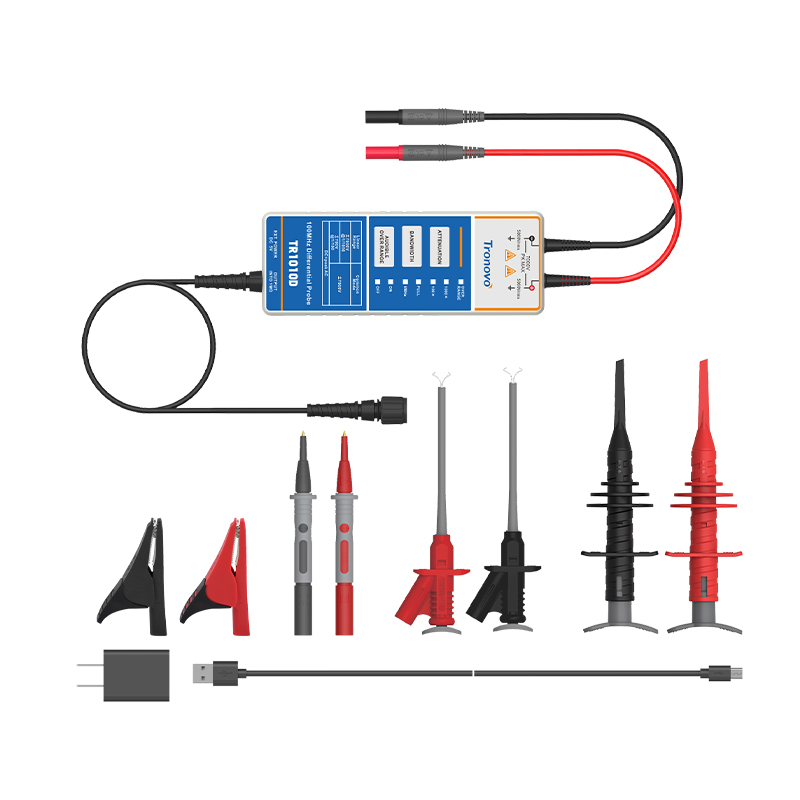
❯ Comprehensive probe accessories for complex test scenarios
Downloads

You may also be interested in these products

Product Parameter

  • Model
  • TR1010D
  • Bandwidth (-3dB)
  • 100 MHz
  • Rise Time
  • ≤3.5 ns
  • Accuracy
  • ±2%
  • Range (Attenuation)
  • 100×/ 1000×
  • Max. Differential Voltage (DC+Peak AC)
  • 100× ±700V / 1000× ±7000V
  • Max. Input to Ground (Vrms)
  • 1000 V CAT III / 2300 V CAT I
  • Input Impedance
  • Single-Ended (to GND): 20 MΩ ±1% / Two Inputs: 40 MΩ ±1%
  • Input Cap
  • Single-Ended (to GND): <5 pF / Two Inputs: <2.5 pF
  • CMRR
  • DC:>80 dB / 100 kHz: >60 dB / 1 MHz>50 dB / 3.2 MHz>30 dB / 50 MHz>26 dB

Product Details

1689235810411851.png

High performance differential probe

50mVrms ultra-low noise and 2% accuracy allow BNC differential probes to accurately analyze uA sensor signals. Hall effect technology combined with differential amplification can directly measure the micro voltage difference of strain gauge, which is suitable for low power verification of medical ECG equipment and industrial automation control system.

Measuring advantages

The differential probe realizes high impedance isolation between the signal end and the oscilloscope ≥ 1MΩ, directly measures the 4000V floating system in the development of cardiac defibrillator, and accurately captures the defibrillation pulse waveform with 80dB common mode rejection ratio, thus completely isolating the risk of electric shock to medical staff. The probe has passed IEC 61010 medical safety certification, meeting the insulation requirements of BF type equipment, ensuring zero missed diagnosis of defibrillation energy analysis.

1682751213592601.jpg
1682751239835596.jpg

CMRR Common Mode Rejection Capability

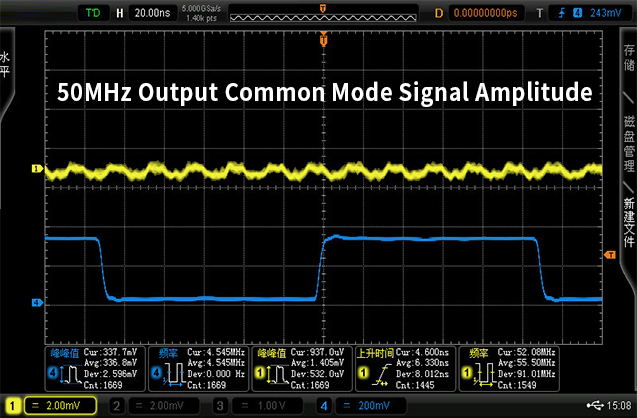
When measuring GaN/SiC half-bridge circuit with sub-probe, 80dB ultra-high common mode rejection ratio can compress 500V common mode voltage to mV level interference, and accurately capture Vgs drive details with 5ns dead time. The probe supports 100V/ns ultra-fast dV/dt change, and the aluminum nitride ceramic isolation medium withstands the double pulse test of 1700V silicon carbide devices, ensuring zero distortion in the loss analysis of the third generation semiconductor switch.

low voltage power supply

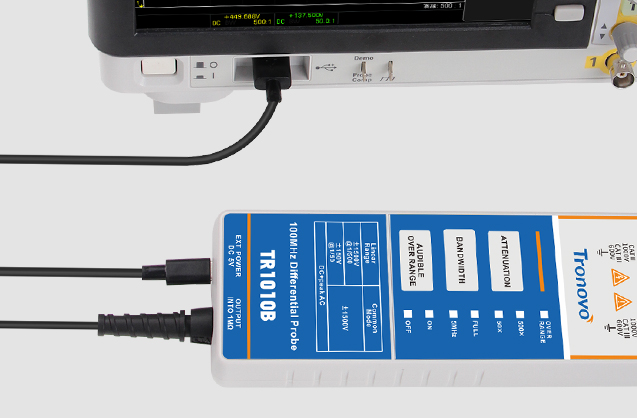
Through the oscilloscope built-in USB interface or external 5V power adapter power supply, using Type-C interface to achieve positive and negative blind plug, support plug and play function. Can provide up to 2A stable current, built-in overvoltage/overcurrent protection circuit. The Type-C cable is widely compatible with existing digital equipment, and the mobile phone charging cable can be directly borrowed to achieve rapid deployment in the laboratory environment.

1682751269879445.jpg
1682751335156602.jpg

pulse signal measurement

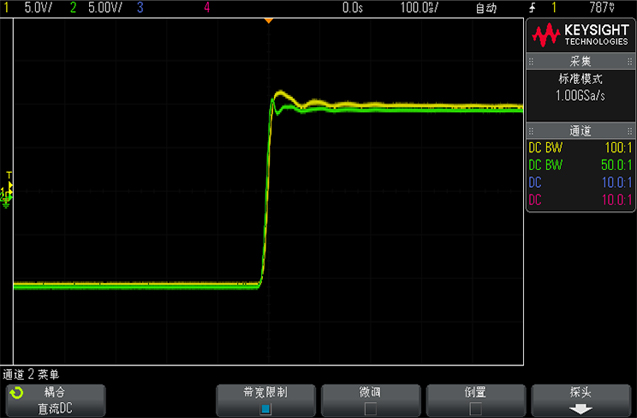
When comparing the rising edge responses of different probes, it is found that the waveform of the contrast probe has obvious ringing phenomenon. This phenomenon is mainly caused by insufficient probe bandwidth or transmission line impedance mismatch, and high-speed signals produce reflection superposition in the probe-oscilloscope path. It is recommended to use an active differential probe with a bandwidth ≥ 3 times the signal frequency to ensure that the input impedance is ≥ 1MΩ, which can effectively suppress ringing. With the oscilloscope 20MHz bandwidth limit function, can further optimize the signal integrity, so that the rise time measurement error <5%, in line with the IEEE1155 standard requirements.

0

Product Video

TAG:

Related Articles